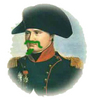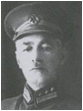

Here we are, two new Cedrist G-ds have been discovered carved on a strange obelisk in a desolate valley on the Lywind and Modan-Lach borders. At approximately five o' clock yesterday, a Lywinder trader- Zebediah Lyhightie- and his Laqi business partner Sirimjuur Yakharjangjurikuzkuzmerilakyzylyotnorgaskinmekhlantirynov stumbled across the two obelisks and attempted to remove the murals to sell to rich collectors in Eriksburg and Brookshire Hamlet, when the faces of the two G-ds bit their fingers, thereby preventing them from extracting the valuable carvings.
The two G-ds then spoke their names, Yoktarh and Kohlarh, stating that they were once Princes of a Khaz-Modani Statelet which lay in these lands but had since fallen, and these obelisks were among the last monuments to the glory which once was this unknown kingdom. The two tradesmen found their wealth, however, and became the first acolytes of Yoktarh and Kohlarh- the two brothers and princes of the unknown kingdom, who taught tolerance and wisdom.
Both Yoktarh and Kohlarh now have a small cult following in Modan-Lach, and their oracles are known as Nyambuu, where priests stand inside hollowed out columns and speak from the wisdom of a mysterious gas expelled from the stones collected by the ruins near the original obelisks in the Lywind-Laqi borderlands. This gas makes the priests go into a hypnotic trance and tell the faithful their futures.
Yoktarh and Kohlarh are but minor G-ds in the grand Cedrist pantheon, and 80% of their followers are ethnically Laqi. Nothing is known of them save for this tale, and a small translated epithet which can still be seen written on the ancient obelisks themselves, in the lonesome valley where the G-ds appeared all those years ago.
' Although you from the path may stray, the Princes' chords to chime
To summon you to their heavenly feast, and partake for all of time'
This has been interpreted in many different ways, but every 12th of December Yoktarh and Kohlarh are celebrated in a grand feast in which the food is hidden beforehand in various places around the city. The Princes, as G-ds of lost objects, are then summoned to find the food, which is then offered to them.
Henceforth, the Princes are known as the 'jolly fat bastards' by their followers, who can be seen by their well-maintained and perfumed double chins, representing the dichotomy of the two G-ds and their wisdom.
Yoktarh and Kohlarh's father in the typical Cedrist pantheon is the crispy G-d of chicken B'Caw... their mother is aparrently a KFC bucket, though this has never been established in any historical sources.
That's my rant of insobriety for today.
Regards,
Hadjimehmetov